October 1, 2026
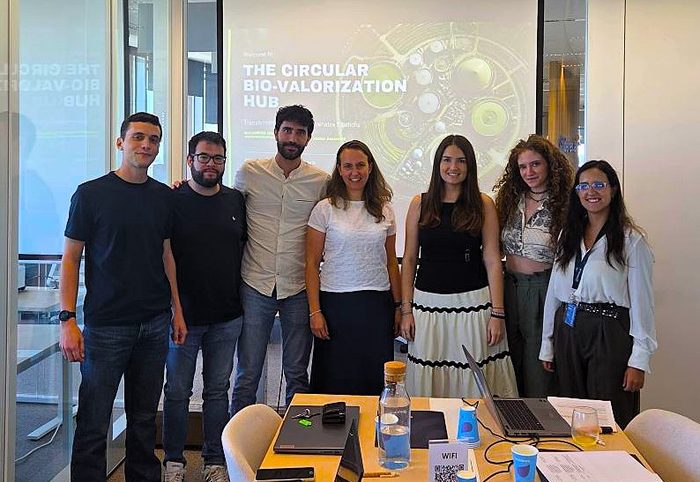
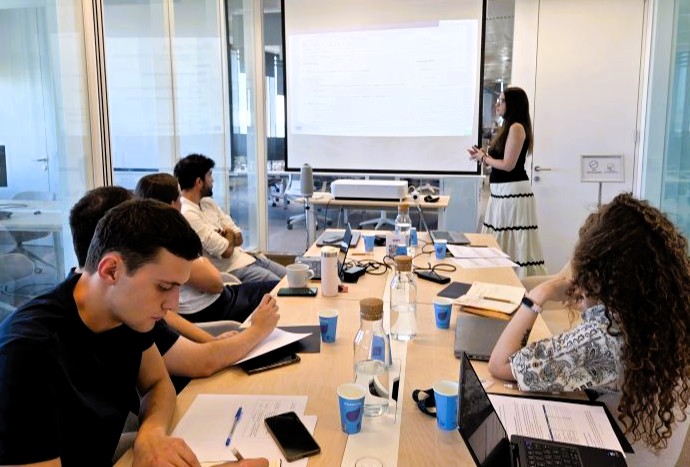
ALGAESOL has taken a first step towards a new cluster with the FLEXBY and BIOVAL projects. The Circular Bio Valorization Hub Clustering Kickoff Meeting took place on 22 September at the IDENER.AI offices in Seville, with partners and stakeholders joining on site and online.
The main goal of the cluster
To bring three complementary Horizon Europe projects together so they can share knowledge, find synergies and speed up Europe’s shift to sustainable fuels and circular, low waste production systems.
The projects work on different routes to the same destination: turning waste streams, captured CO₂ and renewable biological resources into sustainable fuels, valuable products and cleaner industrial solutions.
Meet the three projects
ALGAESOL
Main goal: to convert sunlight into sustainable fuels for shipping and aviation, using microalgae and direct solar technologies.
The project works to improve how efficiently solar energy, CO₂ and organic waste become renewable methanol, methane and biooils, and to cut production costs by 25%. It aims for a circular approach, with all products turned into biofuels, and any CO2 produced to be fed-back into the system.
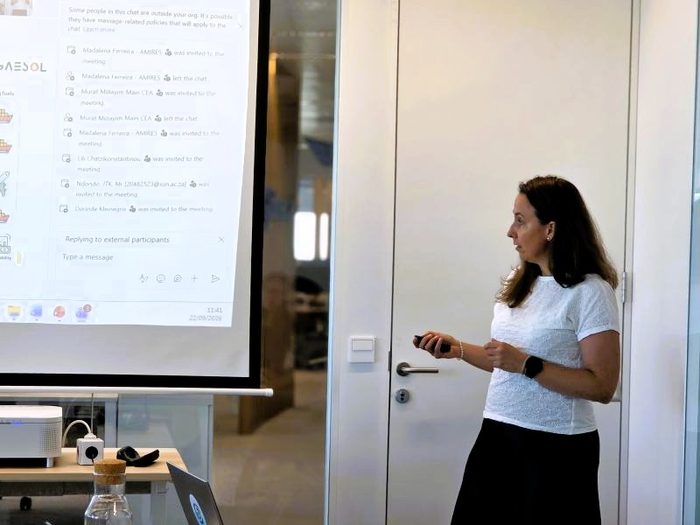
At the meeting, Dorinde M.M. Kleinegris presented our CO2-based biofuel pathways, and progress towards industrial deployment.
FLEXBY
Main goal: to make advanced biofuels from waste instead of food crops.
FLEXBY uses microalgae grown in domestic wastewater and oily sludge from refineries. Microwave assisted pyrolysis turns this biomass into a bioliquid, a pyrolysis gas and bio char. The fuels are then tested in fuel cells for electricity and assessed for use in heavy transport.
Victoria Caballero of IDENER.AI shared insights on the pyrolysis unit configurations, feedstock versatility and downstream processing for efficient resource recovery.

BIOVAL
Main goal: to create and scale up an integrated circular biorefinery with near zero waste and zero carbon emissions.
Using microalgae and bacterial gas fermentation, BIOVAL converts biomass waste and captured CO₂ into advanced biofuels such as algal HVO, hydrogen and methane, plus high value products like the pigment astaxanthin.
Eva María Baena Martínez presented the cascade biorefinery approach, including high pressure gas fermentation metrics and scale up strategies.
Why clustering matters
Each project covers a different part of the picture, from algae and solar fuels to waste pyrolysis and gas fermentation. Working together helps them exchange results, avoid duplicated effort and show a stronger, more joined up path towards a resource efficient European bioeconomy.
Thank you
Special thanks go to Alejandra Hidalgo Domínguez for opening the session, to BIOVAL Project Coordinator Álvaro Cabeza Sánchez for showing how biorefining, carbon valorisation and technological diversity fit within the wider European research vision, and to IDENER.AI for hosting. Thank you also to all speakers and participants.
Follow the clustering journey with FLEXBY, BIOVAL and ALGAESOL on LinkedIn.