July 14, 2026
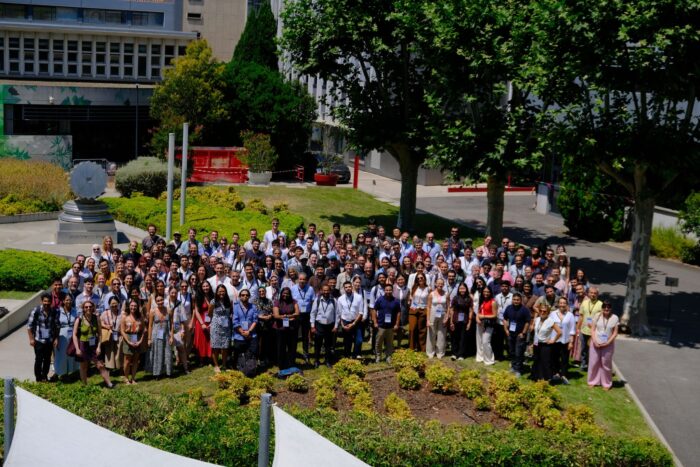
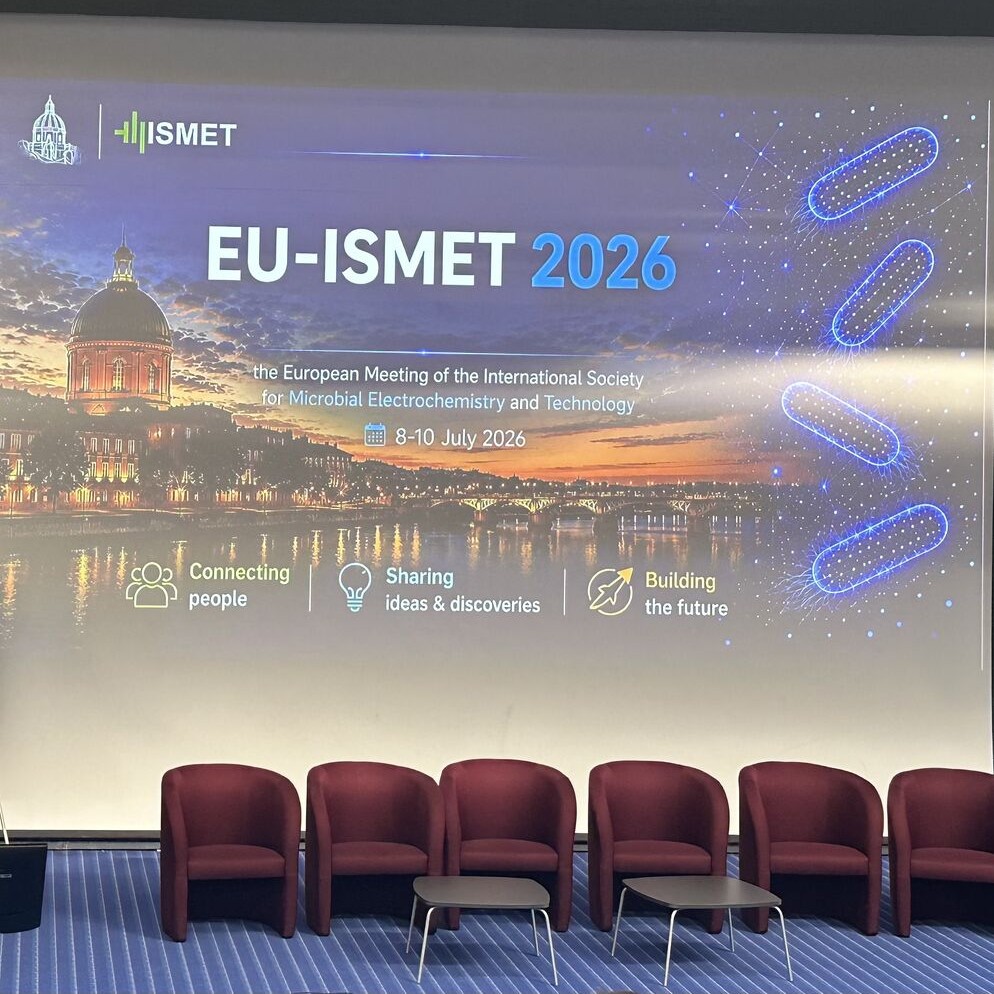
From 8 to 10 July 2026, the ALGAESOL project took part in the European Meeting of the International Society for Microbial Electrochemistry Technology (ISMET) in Toulouse, France. The event brought together scientists and innovators from across Europe to share the latest advances in a field that uses living microorganisms to produce clean energy and sustainable chemicals.
Three voices, one project
ALGAESOL was represented in Toulouse by three members of the project team, each contributing in their own way.
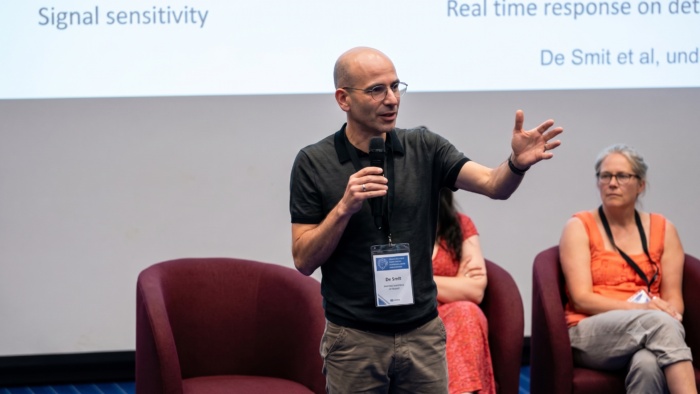
- Sebastià Puig, Professor at the University of Girona, chaired a scientific session and joined a round table on the future of microbial electrochemistry technologies.
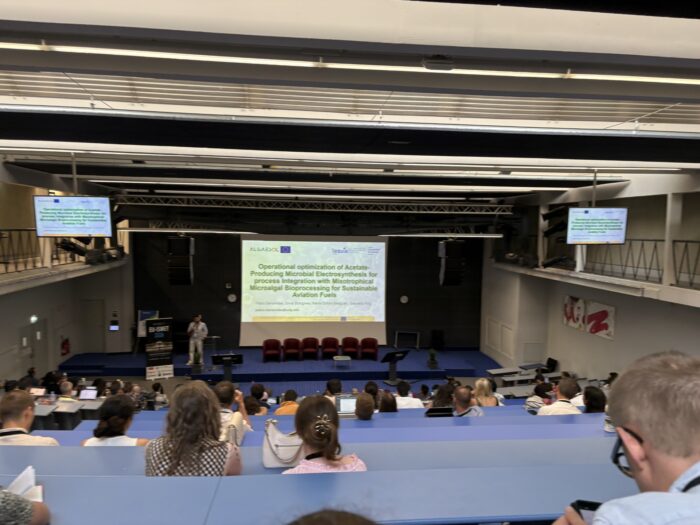
- Pablo Benavides, PhD researcher at the University of Girona, delivered an oral presentation titled Operational optimization of Acetate-Producing Microbial Electrosynthesis for process Integration with Microalgal Bioprocessing for Sustainable Aviation Fuels, co-authored with Silvia Bolognesi, Maria Dolors Balaguer and Sebastià Puig.
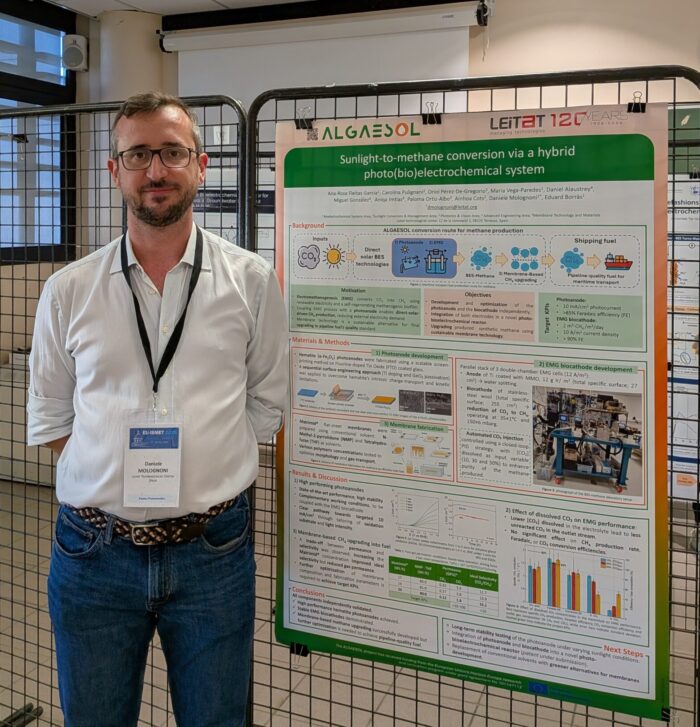
- Daniele Molognoni, researcher at Leitat, presented a poster titled Sunlight-to-methane conversion via a hybrid photo(bio)electrochemical system, developed with colleagues across Leitat’s Bioelectrochemical Systems, Sunlight Conversion, Photonics and Membrane Technology teams. He described ISMET as “the reference conference in Europe for microbial electrochemistry,” adding that the poster was “the only one coupling bioelectrochemical systems with photo electrochemistry, with good interest and interaction with fellow participants.”
The results behind the poster
The poster shared progress on ALGAESOL’s route to renewable methane for maritime fuel. A solar-powered photoanode is already close to its performance target. A biocathode reliably turns carbon dioxide into methane using a self-regenerating microbial biofilm. A dedicated membrane is being fine-tuned to purify the methane into pipeline-quality fuel. The next step is combining the photoanode and biocathode into a single reactor, now under patent submission.
Why it matters
Some microorganisms can generate or use electricity as part of their natural metabolism. Scientists are learning to put this ability to work, using these microorganisms to transform carbon dioxide and sunlight into clean fuels instead of letting emissions go to waste. ALGAESOL is putting this idea into practice, combining microbial electrosynthesis, microalgae cultivation and solar-driven electrochemistry to produce sustainable aviation fuel and renewable methane.
Building momentum
This active presence in Toulouse helped raise ALGAESOL’s profile within the microbial electrochemistry community, strengthening ties with peer researchers and supporting the project’s broader efforts to share its results across Europe.
Curious about the details behind the poster?
Click to see it here or click to read more here.