May 27, 2026
Clean fuels are no longer a vision for the distant future; they represent a pressing global challenge that requires action today. On 26 May 2026, the ENESUS Clean Fuel Horizons Workshop took place in Prague at the Hotel Diplomat, bringing together top experts from research, industry, and policymaking to map out the future of hydrogen, biomass, and sustainable fuel systems.
Organized under the Energy & Sustainability (AMIRES) Programme, this highly collaborative, full-day event was proudly powered by the ALGAESOL and TRIATHLON projects and hosted by AMIRES.
Bridging the Gap Between Innovation and Market Demand
The main takeaway from the workshop was clear: accelerating the clean fuel transition will require a much stronger alignment between policy frameworks, infrastructure development, technological innovation, and real market demand.
Throughout the day, attendees engaged in rigorous panels and presentations covering critical industry pillars:
- Hydrogen Infrastructure: Scaling hydrogen deployment beyond technology readiness, improving economic viability, and establishing better investment conditions.
- Hard-to-Abate Sectors: Encouraging industrial demand and advancing sustainable fuel solutions specifically tailored for aviation and shipping.
- Advanced Engineering: Accelerating innovation in storage, catalysts, plasma technologies, and materials.
- Environmental Responsibility: Ensuring long-term sustainability through Life Cycle Assessments (LCA) and strict circular approaches.
ALGAESOL and Expert Contributions
The workshop featured an exceptional lineup of cross-sector speakers who shared their latest breakthroughs and experiences. The ALGAESOL consortium contributed heavily to the discussions, highlighting how nature-powered microalgae pathways, direct solar energy, and early-stage sustainability assessments are advancing the green transition.
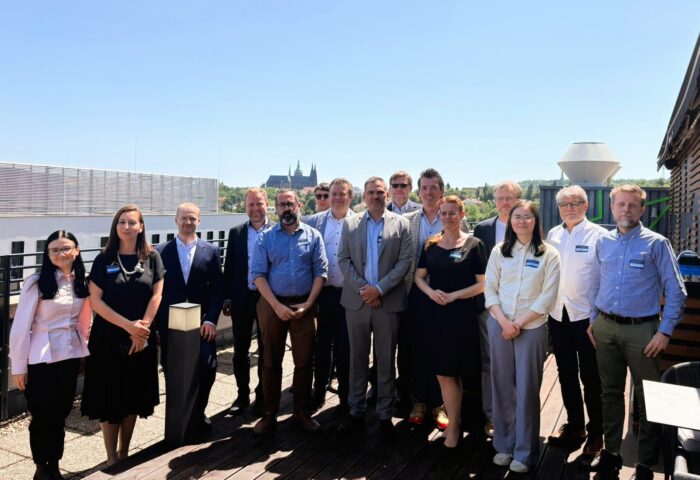
We extend our sincere thanks to all the speakers who made this event a success:
- Petr Mervart — Ministry of Industry and Trade of the Czech Republic
- Jack Gomersall — Clean Air Task Force
- Julien van Campen — Delft University of Technology
- Vladimír Matolín — LEANCAT ELECTROLYZERS s.r.o.
- Burkhard Zimmermann — Fraunhofer FEP
- Christoph Ebert — Institute of Lightweight Engineering and Polymer Technology (ILK), TU Dresden
- Martin Křemenák — Czech Hydrogen Technology Platform (HYTEP)
- Tomáš Diósi — Gas Storage CZ
- Igor Hudák — Brno University of Technology
- Kateřina Svobodová — VUHU
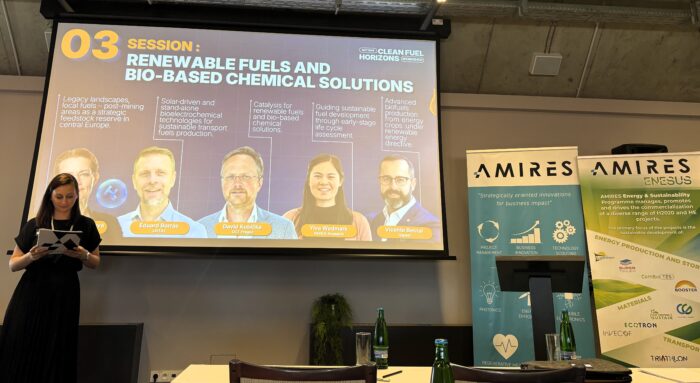
- Eduard Borràs — Leitat Technological Center (ALGAESOL Project)
- David Kubička — University of Chemistry and Technology in Prague (UCT Prague)
- Ylva Katarina Wedmark — NORCE Research (ALGAESOL Project)
- Vicente Bernal — Repsol
Relive the Workshop
Thank you to everyone who joined the sessions and contributed to the inspiring atmosphere in Prague.
📺 Watch the official event aftermovie below to catch the highlights, and head over to the AMIRES website for the full breakdown of insights from the day!
🌟 ALGAESOL in the Spotlight
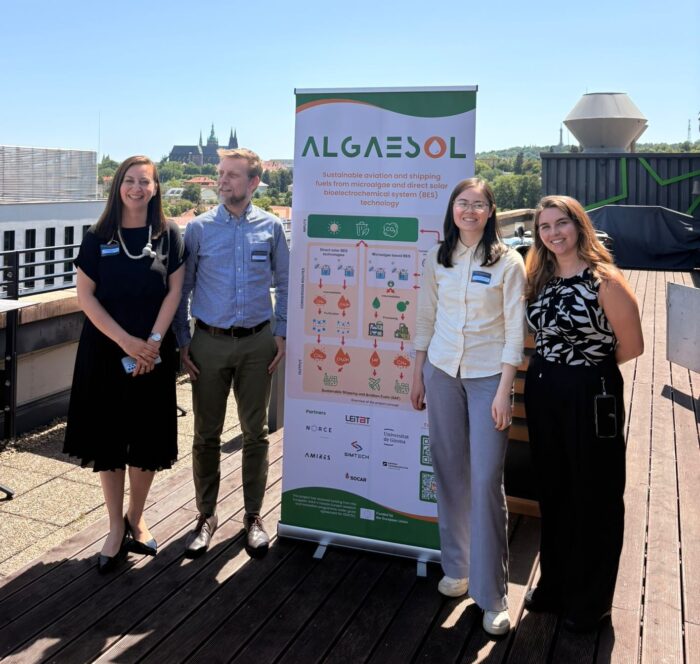
As a driving force behind the workshop, the ALGAESOL project was prominently represented on stage. Two of our consortium’s leading experts delivered key presentations, showcasing how nature-powered microalgae pathways, direct solar energy, and rigorous sustainability modeling are shaping the future of heavy transport fuels:
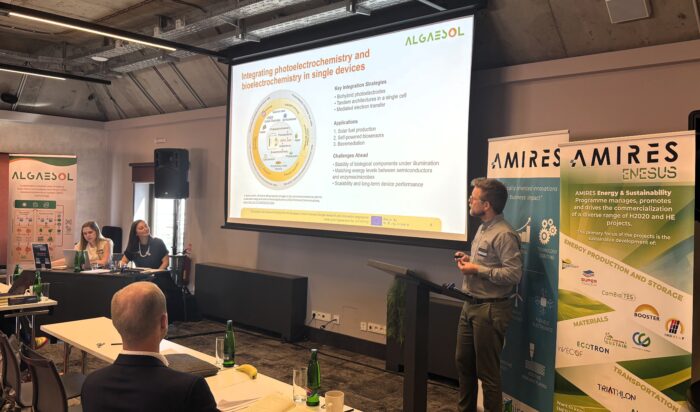
- Eduard Borràs (Leitat Technological Center): Captivated the audience with a deep dive into solar-driven bioelectrochemical technologies. He demonstrated how integrating direct sunlight harvesting with microalgae and CO₂ conversion can drastically drive down the production costs of advanced, sustainable bio-oils and methanol.
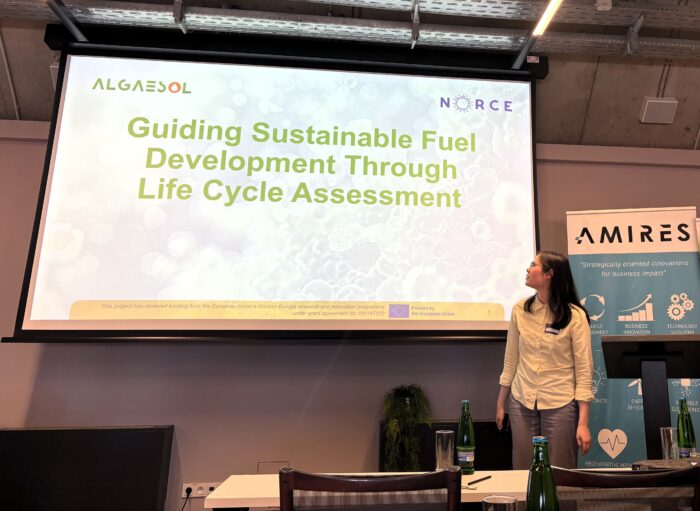
- Ylva Katarina Wedmark (NORCE Research): Took the stage to highlight the fundamental importance of early-stage Life Cycle Assessment (LCA). She shared how analyzing environmental impacts from the absolute beginning of research allows the ALGAESOL consortium to design truly circular, low-carbon value chains from the ground up.