July 30, 2026
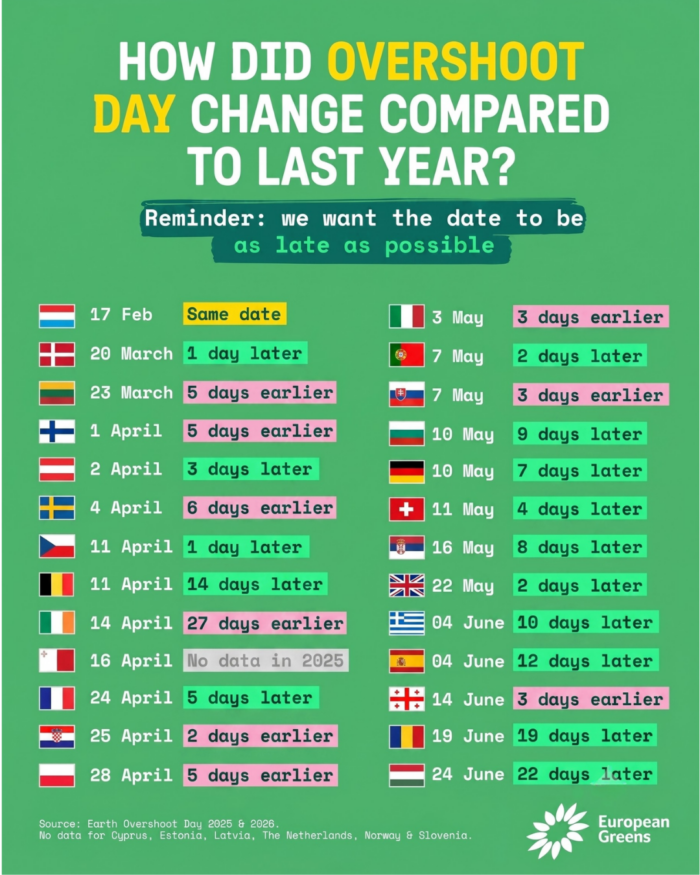
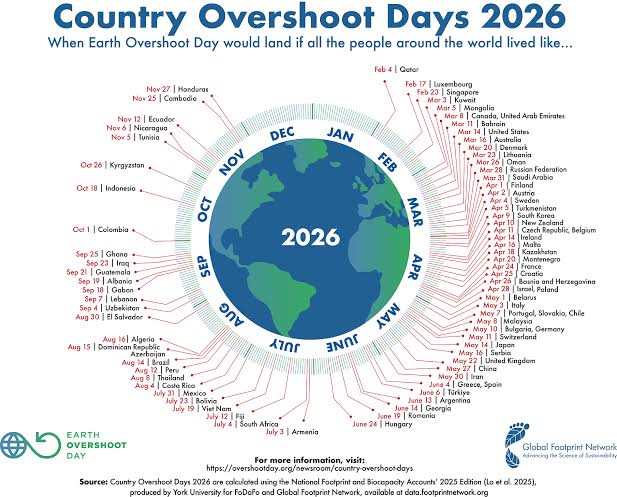
July 30, marks Earth Overshoot Day 2026, the day humanity has used up nature’s entire annual budget of ecological resources. According to Global Footprint Network and York University, we are currently consuming resources 73% faster than the planet can regenerate, the highest level of overshoot ever recorded. From today until the end of the year, humanity operates on ecological credit, deepening a debt that already stands at the equivalent of 20.6 years of the Earth’s full regenerative capacity.
Sectors like transport, shipping, and aviation keep our economies moving, but they are also among the hardest to decarbonize and among the biggest drivers of what we consume versus what the planet can regenerate. Closing that gap requires exactly the kind of applied, scalable innovation that projects like ALGAESOL are built to deliver.
The date is calculated: by dividing the planet’s biocapacity (its ability to regenerate resources and absorb waste) by humanity’s Ecological Footprint (our total demand on nature), then multiplying by 365. The result is the day of the year when we’ve used up an entire year’s worth of resources.
Turning Sunlight Into Solutions
ALGAESOL is developing concrete pathways to ease the pressure highlighted by Earth Overshoot Day. Rather than treating sustainability as a distant goal, the project is engineering practical alternatives to fossil fuels for two of the most emissions-intensive and hardest-to-abate sectors: shipping and aviation.
At its core, ALGAESOL harnesses microalgae- and direct-solar bioelectrochemical technologies to produce methanol, methane, and bio-oils, renewable fuels capable of directly displacing fossil-based energy sources in transport. This is precisely the kind of transformation that Global Footprint Network points to as a genuine way to #MoveTheDate.
The Numbers Behind the Ambition
ALGAESOL targets up to 25% lower production costs and up to 20% less environmental impact than today’s fuel processes, while reusing about 80% of residual biomass in a circular value chain.
This circular, waste-reducing approach directly addresses the kind of natural capital depletion described in this year’s Earth Overshoot Day report, the erosion of biocapacity that accumulates, year after year, into a debt future generations will have to repay.
Building Europe’s Resilient, Sustainable Future
Beyond its environmental impact, ALGAESOL contributes to a secure and competitive European fuel supply chain, reducing dependence on imported fossil energy while advancing the EU’s climate goals. In a moment when Earth Overshoot Day serves as an annual reminder that ecological limits cannot be ignored indefinitely, projects like ALGAESOL show that ambition, science, and economic viability can move in the same direction.
ALGAESOL stands as an example: a deliberate, scientifically grounded design for a future where transport fuels no longer draw down the planet’s dwindling reserves.
Overshoot data source: Global Footprint Network & York University, National Footprint and Biocapacity Accounts (2026 edition). Read the official press release or visit footprintnetwork.org for more.